

Starting Supplication (DE): (1 of (DE) 9)

First of all you have to make Niyyah for Wudu. As per Islamic concept Niyyah refers to intention of doing or performing an act. In order to perform wudu truly by all your heart, you should focus seriously on what you are doing. Niyyah doesn’t necessarily involves saying anything loud, but focusing on the phrase “Bismillah” is an adequate way to carry out the centering obligation.

Wash your hands (DE): (2 of (DE) 9)
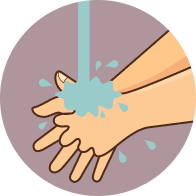
Wash your both hands to the wrist three times, ensuring that you are using your left hand to wash your right hand and vice versa. Make sure to wash in between your fingers and all the way up to your wrist. This act of washing hands should be repeated thrice.

Take water into your mouth (DE): (3 of (DE) 9)
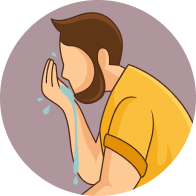
Use your right hand to cup water in your mouth to the throat, gargle if necessary so that all the remaining food particles get out of your mouth.

Washing Nose (DE): (4 of (DE) 9)
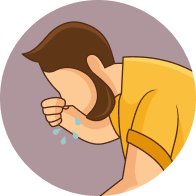
Use your right hand to cup water and inhale it into your nose three times. Breathe in sharply and immediately throw out without harming yourself. If it is difficult for you to inhale water into your nose, you can use your left finger to wet your nose and can put water on the lower part of your nostril.

Wash your face (DE): (5 of (DE) 9)

Wash your face three times by spreading your hands from your right ear to the left, and from the edge of the hair to the chin.

Wash your arms (DE): (6 of (DE) 9)
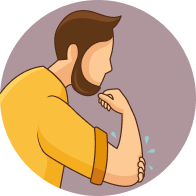
Wash your lower arms from wrists to elbows, leaving no part dry. From your wrist to your elbow, wash your right arm with your left hand three times and then wash your left arm with your right hand three times.

Clean your head (DE): (7 of (DE) 9)

Wash your head from front to the back with wet hands. Gently wipe your forehead from the eyebrow to the hairline. Do this one time.

Wash/Clean your ear (DE): (8 of (DE) 9)

With the same water clean your ears inside out. Use index finger to clean inside of the ear and thumb to clean backside of the ear. Wash properly from the back of your neck. Use backside of your both hands to clean neck. This action should be done once.

Wash your feet (DE): (9 of (DE) 9)
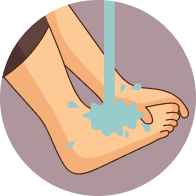
Wash your right feet first and then the left feet. Especially wet toes three times. Clean up the ankles and make sure that water reaches between the spaces in your toes. Use your pinky finger to clean the spaces between the toe and fingers.

FAQs: (DE)

Zakat is not accumulated on income or your monthly wage. It's the value of assets you've had for a year that determines your zakat obligation.
The new Islamic year is set to begin on [date]. The new Islamic year begins on the 1st of Muharram. The Gregorian date may vary.
The most important Kalma is the first Kalma (Kalma Tayyab) since it is essential for a Muslim to be a true believer.
The names of the six Kalmas are Kalma Tayyab, Kalma Shahadat, Kalma Tamjeed, Kalma Tauheed, Kalma Astaghfaar, and Kalma Radd-e-Kufr.
Reciting and memorizing the six Kalmas strengthens faith, invokes spiritual purity and tranquility, and washes away sins.
A part of the second Kalma (Kalma Shahadat) is recited during Tashahud in Namaz to reaffirm our belief in the oneness of Allah and in the Prophet being His last messenger.
Every Muslim is bound to pay zakat annually. The amount of money you give will be based on your accumulated wealth over the hijri year.
The shortest answer is yes. However, calculating business zakat can contain a lot of complexities, such as business expenses, inventory, and debts. It is best to consult with scholars or experts to ensure accurate calculations.
Yes, your zakat calculation is considered confidential between you and Allah (سُبْحَانَهُ وَتَعَالَى). There is no obligation to disclose the exact amount of your zakat to others.
Yes, zakat is payable on the gold you wear.
Personal residences, regardless of their value, are not counted as part of zakat calculations.
Unsettled loans are deducted from your assets when calculating zakat. If you owe money to others, it diminishes the overall value of your wealth, potentially affecting your zakat obligation.
The 12th and last month of the Hijri calendar is Dhu’l-Hijjah.
Yes, you can choose to pay your calculated zakat every month.
Certain categories of people, such as wealthy individuals whose wealth exceeds the nisab threshold, are not eligible to receive zakat. Additionally, close relatives and dependents are generally not eligible to receive zakat from you.
Zakat recipients generally include the needy, those who are working to establish themselves, those in debt, those who are engaged in the distribution and collection of zakat, and travelers.
Zakat is not directly calculated on income. Instead, it's based on accumulated wealth over a lunar year. Income taxes are not a direct factor in zakat's calculations.
No, it is not necessary to disclose the amount of zakat you give to those in need. On the other hand, sharing your purpose behind giving zakat can encourage others to fulfil their charitable obligations and foster a beautiful culture of giving.
Salah is the second pillar of Islam and obligatory for every mature and sane Muslim. Muslims offer Salah to praise Allah, talk to Him, ask for forgiveness and mercy, and to connect with Him.
Closing one's eyes during Salah is considered Makruh (undesirable) because Muslims are essentially commanded to look at the place of prostration while praying. However, it may be permissible and even prioritized if one feels that keeping his eyes closed helps focus and concentrate during prayer.
While praying, Muslims should look at the place of prostration (during Qiyam), at their feet (during Ruku), the tip of their nose (during Sujood), at their lap (during Qu’ood), and at their shoulders (while performing Salah).
Yes. Although men must ideally offer prayers in the mosque, they can be offered anywhere except rubbish dumps, bathrooms, and graveyards.
Yes. You can wear gloves while offering prayers since it is not mandatory for your hand to touch the ground directly during Sujood (prostration).
Al-Ghani (The Rich, The Independent, The Wealthy) and Al-Razzaq (The All-Provider) should be recited for barakah and abundance in rizq and wealth.
Books, essays, and videos are just some of the many options for digging more into tasbihat's history and philosophy. Islamic scholars and websites often guide Dhikr practices and tasbihat.
Tasbihat are considered optional acts of worship in Islam. While not obligatory, engaging in Dhikr and tasbihat is highly recommended and carries excellent spiritual rewards.
Before performing any act of worship, including tasbihat, it is important to have a definite intention, also known as a niyyah. It is important to have a pure intention, with the end goal of remembering and glorifying Allah سُبْحَانَهُ وَتَعَالَى.
The practice of tasbihat is not restricted to the period in which a person is praying but can be done at any time. No matter if they are sitting at a desk, in a queue, or on the road. Islam requires its followers to constantly keep Allah سُبْحَانَهُ وَتَعَالَى in mind.
The number of times one should recite tasbihat is not set in stone. Even though it is customary to say the tasbihat (SubhanAllah سُبْحَانَ الله, Alhamdulillah الْحَمْدُ لِلَّهِ, and Allahu Akbar اللَّهُ أَكْبَرُ ) 33 times after prayers, Muslims are free to do it as often as they like.
The most common tasbihat are phrases glorifying and remembering Allah سُبْحَانَهُ وَتَعَالَى , including "SubhanAllah (سُبْحَانَ الله)" (Glory be to Allah ), "Alhamdulillah (الْحَمْدُ لِلَّهِ)" (Praise be to Allah), "Allahu Akbar (اللَّهُ أَكْبَرُ)" (Allah is the Greatest), and "La ilaha illallah (لَا إِلَـٰهَ إِلَّا اللَّهُ)" (There is no god but Allah). Other common phrases include Istighfar (seeking forgiveness) and Darood Sharif (blessings on the Prophet Muhammad ﷺ).
The most mentioned name of Allah in the Holy Quran is Al-Ghafur (The Ever-Forgiving). It occurs 91 times.
The 13 attributes of Allah are Oneness, Existence, Everlastingness, Eternity, Power, Will, Non-neediness of others, Knowledge, Sight, Hearing, Speech, Life, and Non-resemblance to His creation.
Yes. The 99 names of Allah have been revealed to Muslims in the Holy Quran.
Al-Muhaymin (The Protector) should be recited to seek protection from all evils.
Yes, tasbihat can be done in a group setting. Gatherings of Muslims for Dhikr include reciting tasbihat, praising Allah سُبْحَانَهُ وَتَعَالَى, and showering blessings upon the Prophet Muhammad ﷺ.
Ash-Shafee (The Healer) should be recited for good health.
Islamic media helps in the dissemination of authentic facts and knowledge about Islam and its teachings with the help of lectures, talk shows, podcasts, and Q&A sessions.
One should make sure before making any Islamic content that it is within the bounds of Islamic rules and regulations and is 100% authentic and genuine.
Those who aspire to become Muslim speakers and scholars must acquire a great deal of knowledge in Islam, the Holy Quran, and Sunnah, in addition to Sharia and Islamic jurisprudence, from authentic circles of knowledge.
Hajj {year} is set to begin from the evening of [Date] until the evening of [Date]. Hajj is performed from the 8th to the 13th of Dhu’l-Hijjah. The Gregorian dates vary each year.
Ramadan {year} will start on [Date] and will continue for 29 or 30 days based on the moon’s sighting. Fasting starts from 1st Ramadan and lasts till the moon of Shawwal is sighted.
Rabi ul Awal {year} is expected to begin on [date]. Rabi ul Awal is the month in which the Prophet Muhammad was born. This month is marked with celebrations, acts of charity, and goodwill.
The month of Safar {year} is to commence on [date]. The Prophet Muhammad suffered many hardships during the month of Safar. He recommended engaging in ibadah and saying astaghfar in this month to remain in Allah's protection and favor.
Ashura {year} is on [date]. Ashura means the 10th. Specifically, it refers to the 10th of Muharram, which is an important date in Islamic theology.
Muharram marks the beginning of a new Islamic calendar, and so it is the 1st month.