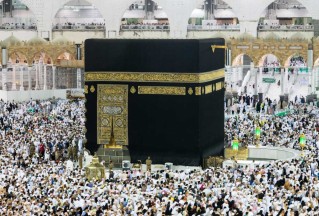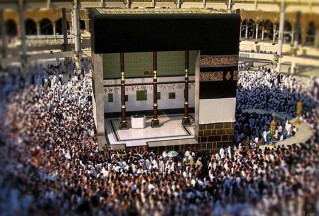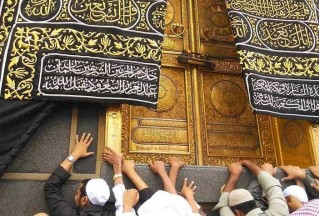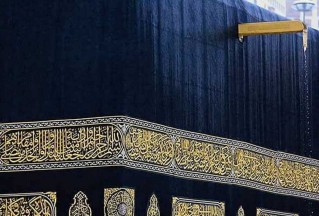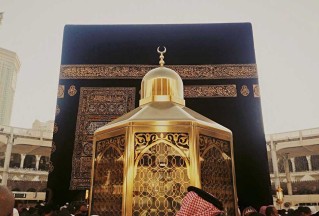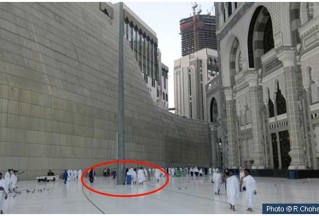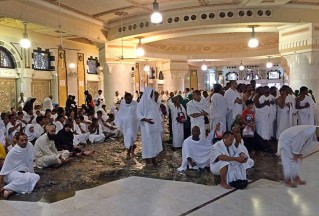

The Grand Mosque of Mecca, more popularly known as “Al-Masjid Al-Haram” (المسجد الحرام), is the holiest and most revered place on earth for Muslims. It is situated in the holy city of Mecca, Kingdom of Saudi Arabia, which is the most visited worship place in the Muslim World. It is the place where the Ka’aba is located (the Qibla). Every Muslim has to turn their faces towards it, while offering prayers (salah), no matter where they live, across the world.
Since the Ka’aba is situated right in the middle of it, the religious status of Masjid Al-Haram becomes even more significant. The significance of Masjid Al-Haram and Ka’aba is specifically mentioned in the Quran in many verses, such as the 96th verse of Surah Aal-e-Imran.
Translation – The first House of God to be set up for men was at Bakkah the blessed, a guidance for the people of the world.
Hence, it is the central and most important place of worship for Muslims, and it becomes even more important as the focal point of rituals during Hajj or Umrah.
Masjid Al-Haram (Grand Mosque of Mecca is situated in almost the middle of the City of Mecca, in Saudi Arabia. https://maps.app.goo.gl/ViuAmSWmNnRyz1De6.
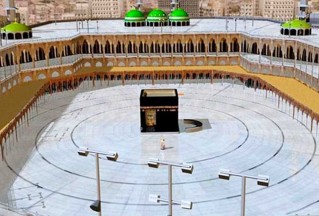
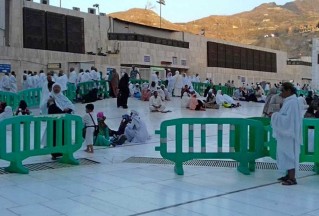
Currently, the Grand Mosque of Mecca is situated on a total area of around 88 Acres. (Approximately 356,000 square meters or 4.3 million square feet). The total space occupied by the Grand Mosque includes wide open space, especially around the Ka’aba, while quite a considerable area is covered with roofs.
Masjid Al-Haram can accommodate more than 3 million worshipers at a time.
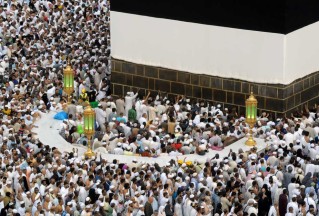
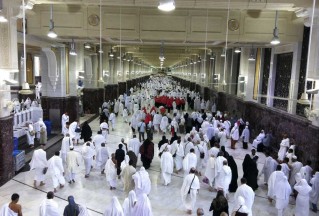
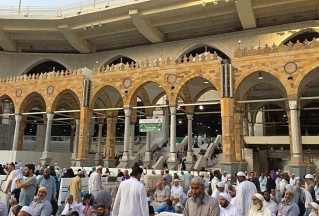
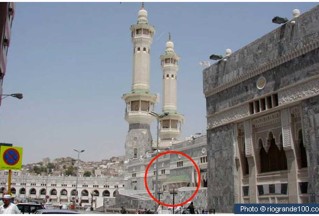
The Mosque comprises open spaces, spacious prayer halls, covered corridors, verandas, and 13 minarets. The height of each minaret is 139 meters (456 feet). The area around the Ka'aba can accommodate some 107,000 pilgrims at a time, for the fulfillment of the most important part of Hajj and Umrah, the ritual of Tawaf. The site of another important ritual of Hajj and Umrah, Sa’i (walking between the hills of Safa and Marwa), is also included alongside the Mosque area, which is covered by a roof.
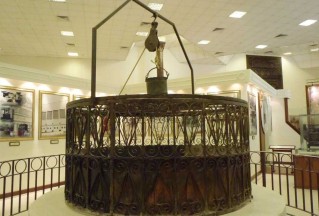
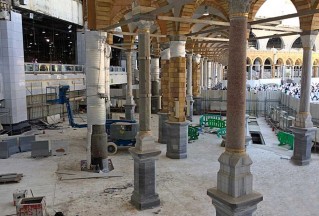
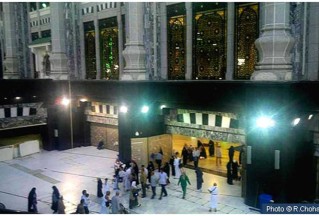
Additionally, facilities such as ablution (Wudu) are included in the main complex of Masjid Al-Haram. The most sacred well of Zamzam is also included in this complex. During the recent phase of renovation and expansion, the Tawaf area has also been expanded, providing multi-layered covered spaces to accommodate and facilitate more pilgrims. It is in addition to the already available open space around the Ka’aba, where traditionally the ritual of Tawaf is performed.
So, Masjid Al-Haram or the Grand Mosque of Mecca, is not just a traditional Mosque; it is something beyond that and comprises of a huge complex, managed by the “General Presidency of Harmain” (an official body responsible to take care and manage the affairs of the two Holiest Sites, the Grand Mosque of Mecca and the the Prophet’s Mosque Medina).
The history of the construction of the Grand Mosque of Mecca is closely associated with the initial historic construction of Ka’aba (House of Allah سُبْحَانَهُۥ وَتَعَالَىٰ, which dates back to the era of the Prophet Ibrahim and his son, Prophet Ismail عَلَيْهِمَا ٱلسَّلَامُ. The site of construction of the Ka’aba was revealed to the Prophet Ibrahim عَلَيْهِ ٱلسَّلَامُ by Allah سُبْحَانَهُۥ وَتَعَالَىٰ, as mentioned in the 26th verse of Surah Al-Hajj.
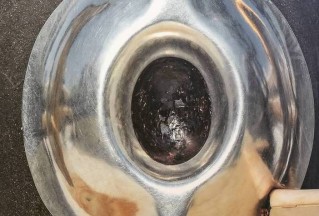
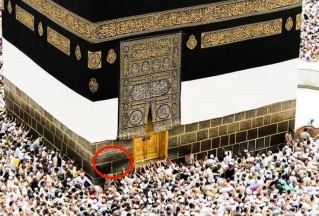
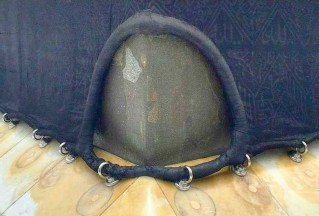
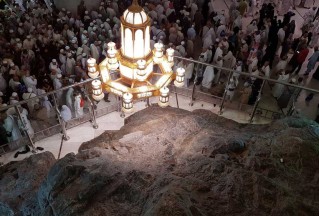
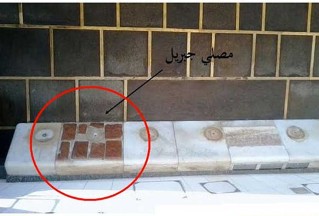
Similarly, the 127th verse of Surah Al-Baqarah narrates that the Ka'aba was constructed by the Prophets Ibrahim and Ismail عَلَيْهِمَا ٱلسَّلَامُ. It is also believed that the Black Stone (Hajr-e-Aswad), the most sacred stone, was brought down by the Angel for placement in the Ka’aba. Since then, this has been the central place of worship, visited by pilgrims from all over the world. The House of Allah, سُبْحَانَهُۥ وَتَعَالَىٰ (Ka’aba), underwent reconstruction, renovation, and expansion throughout history in various eras.
The first major reconstruction of Ka’aba and Masjid Al-Haram in known history took place in the early 7th Century CE, a few years before the inception of Islam. All the tribes of Mecca and the surrounding areas took active part in its construction, including the Quraysh tribe. The Prophet Muhammad صَلَّى ٱللَّٰهُ عَلَيْهِۦ وَسَلَّمَ, who had gained popularity among the Meccans as being a pious, honest, and trustworthy person, also participated in its reconstruction.
When the construction work was almost completed, a serious dispute arose among different tribes. All of them wanted to take the honor of placing the Hajr-e-Aswad (Black Stone) at its designated place. Before the conflict turned into a deadly bloodshed, some of the elders took hold of the situation. It was decided that the person who enters the Ka’aba first, on the coming morning, will be given the responsibility to decide the matter of placing the Black Stone.
On the next morning, the Prophet Muhammad صَلَّى ٱللَّٰهُ عَلَيْهِۦ وَسَلَّمَ, who was not yet assigned the Prophethood, was the first to enter the premises of the Ka’aba. The issue was, therefore, entrusted to him. The Prophet asked for a piece of cloth and placed the Black Stone on it. Then he invited the representatives from all the tribes to hold different corners of that cloth to take it to the designated place. Then the Prophet himself installed Hajr-e-Aswad in its respective place. Everyone praised this wise act, which had also averted a deadly conflict among the Meccan tribes.
By the time the Prophet Muhammad صَلَّى ٱللَّٰهُ عَلَيْهِۦ وَسَلَّمَ had started spreading the Message of Islam, this sacred place was filled with idols by the disbelieving Quraysh of Mecca. They had also adopted various improper practices during the pilgrimage. After the historic Conquest of Mecca by the Muslims, under the leadership of the Prophet, Ka’ab and Masjid Al-Haram also came under their control.
As a first thing, the Prophet, along with his companions, cleared the Ka’aba of all the idols that the disbelievers had placed. It was the turning point in the rehabilitation of Ka’aba and Masjid Al-Haram, restoring their sanctity and making them the most revered and sacred places for Muslims. Since then, this has become the most sacred place of worship, and millions of Muslims from all over the world come here for Hajj and Umrah.
While the Ka’aba was restored in its original role as the central place of worship and pilgrimage by the Prophet himself, it has consistently undergone phases of reconstruction, renovation, and expansion by various Muslim Rulers.
Here is a brief history of subsequent renovations and expansions:
During the ongoing Saudi Era, the Ka'aba and Masjid Al-Haram have undergone three major phases of renovation and expansion.
During this phase, Masjid Al-Haram underwent a major renovation. Four new Minarets were added, and the ceiling was also refurbished during this phase of renovation. The floor was refurbished with artificial stone and marble. The place of Sa’i was also included in the main complex of the Mosque during this era.
This was the most prominent phase of renovation and expansion. It included:
The third phase of the renovation and expansion of Masjid Al-Haram started in 2008. The highlights of this phase are as follows:
Being the most sacred and massively visited place, the maintenance, management, renovation, and expansion of Ka’aba and Masjid Al-Haram always remain among the top priorities by the authorities. The renovation and expansion are therefore a continuous ongoing process.
May Allah سُبْحَانَهُۥ وَتَعَالَىٰ Bless every Muslim with an opportunity to visit the holiest place on earth and perform Hajj or Umrah.